

Saffronica
Why Saffron Corms Fail to Flower
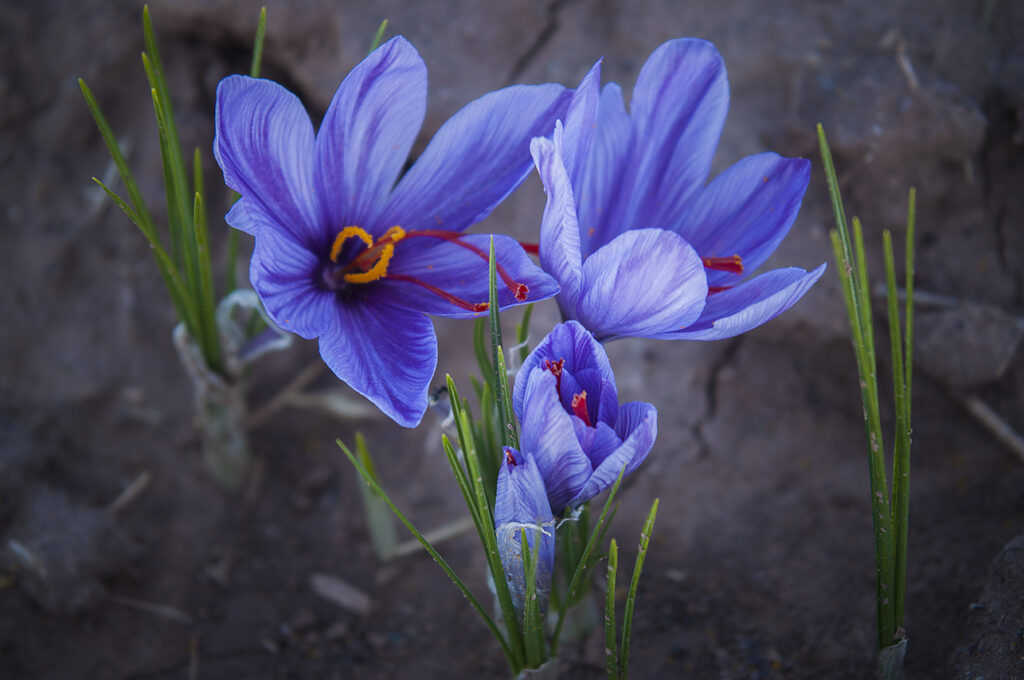
Typically, when saffron is first planted, it doesn’t bloom in the first year. During this time, the corms are focused on establishing roots and multiplying. It’s usually in the second year that saffron flowers begin to appear, often in late October or early November. However, even after the second year, a saffron field might not bloom. Reasons for this can include the size of the saffron corms, poor soil and fertilizer conditions, improper foliar feeding, fungal diseases and mites, planting depth, failure to break the soil crust, lack of weeding, and overcrowded planting.
Mayada Recommends:
- The size, strength, and nutrition of the saffron corms are crucial for flowering. Ideally, saffron corms should weigh at least 7 to 8 grams. If the corms in your field are small, it’s important to learn how to cultivate larger saffron corms.
- Saffron plants need to be well-nourished to bloom. Strengthening the corms involves using specific fertilizers at the right times and in the correct amounts.
- Foliar feeding is essential for successful saffron flowering. This involves applying fertilizer to the field 4 to 6 times. The solution used for foliar feeding should be tailored to the soil, climate, and specific needs of the corms.
- Mites and fungal infections are common issues that can interfere with saffron flowering. Healthy saffron corms should be firm, with no spots or signs of disease. Periodically, randomly select a few corms from the field to check their condition.
- Saffron corms should be planted at a depth of 20 to 25 centimeters. Planting them too deep or covering them with too much soil can suffocate the corms. Additionally, salty soil can negatively affect the quality of flowering.
- Clay soil is ideal for saffron cultivation because it retains moisture around the corms during hot weather, preventing heat stress. Salty, lime-rich, or gypsum-rich soils can prevent saffron corms from flowering. The soil’s electrical conductivity (EC) should be less than 2000 microsiemens, and the pH should be between 6 and 7.
- Water quality is also crucial for saffron flowering. The water’s EC should be below 2000 microsiemens, and the pH should be between 6 and 7. If the water’s quality is outside this range, the corms may not receive proper nourishment.
- Could poor flowering be due to not breaking the soil crust? Yes! Since saffron is typically grown in clay soil, which cracks after rain and hardens when dry, it’s essential for farmers to break the crust to allow the saffron to grow.
- While weeds might look harmless, they can actually cause damage. If weeds are not removed, they can deplete the corms’ nutrients, leaving the flowers without the energy they need to bloom. Herbicides like Sencor are often used to control weeds, but they must be applied carefully and in the right amounts.
- The number of corms planted per square meter should be carefully managed. In modern planting methods, around 8 tons of corms are needed per hectare, while traditional methods require about 4 tons of corms, each weighing around 8 grams. If the planting density is too high, the corms will compete for nutrients and water, weakening them and leading to fewer, less robust flowers.
- Other factors, such as planting saffron alongside other crops, the timing of corm planting, the age of the field, irrigation methods, nutrient levels in the soil and water, fertilization practices, and temperature stress, can also impact saffron flowering.